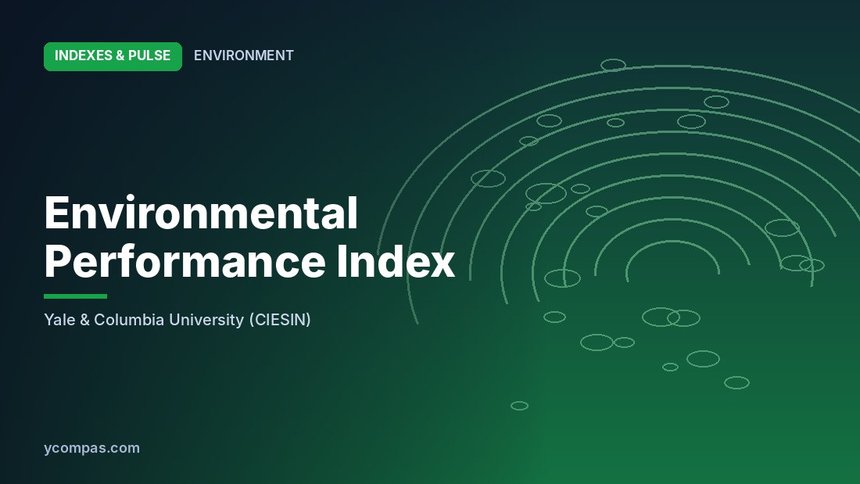
Which countries are doing the most to protect human health from environmental harm and to preserve their ecosystems? The Environmental Performance Index (EPI), produced by the Yale Center for Environmental Law & Policy and Columbia University’s Center for International Earth Science Information Network (CIESIN), answers with a data-driven scorecard. The 2018 edition, launched in January at the World Economic Forum’s Annual Meeting, ranks 180 countries.
Origins and ownership
The EPI grew out of the Environmental Sustainability Index, published by the same teams between 2000 and 2005. A pilot EPI followed in 2006, and the index has been published every two years since, in collaboration with the World Economic Forum. Where its predecessor assessed long-term sustainability, the EPI focuses on measurable outcomes that policymakers can act on.
How it is measured
The 2018 EPI uses 24 performance indicators across 10 issue categories, grouped into two policy objectives:
- Environmental health — air quality, water and sanitation, and heavy metals, all of which affect human health directly.
- Ecosystem vitality — biodiversity and habitat, forests, fisheries, climate and energy, air pollution and water resources, and agriculture.
Indicators measure how close each country is to established environmental policy targets, using data from international organisations, research institutions and satellite observations. Scores are combined with weights into a 0–100 scale.
Reading the results
A higher score means better environmental performance. The 2018 edition placed Switzerland at the top. The two objectives tell different stories: environmental health is strongly linked to wealth and infrastructure, while ecosystem vitality often reflects the pressures of industrialisation and urbanisation. Because indicators and data are revised from one edition to the next, the EPI team publishes back-calculated scores for trend comparisons rather than comparing ranks across editions.
Why it matters
The EPI turns environmental goals into numbers that governments can track. It highlights leaders and laggards on each issue, and makes visible the trade-offs between economic development and environmental protection — as well as the countries that manage to reconcile them.
Find out more
- Official source: Yale — Environmental Performance Index
- Explore country scores on YCompas WorldIndex: Environmental Performance Index